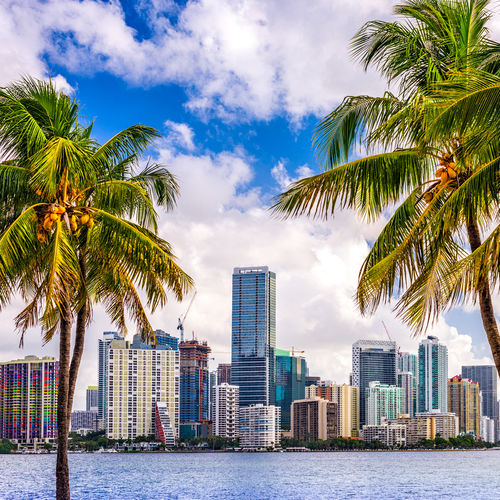


If you’ve officially decided to move to Miami, it’s worth understanding what everyday life here actually looks like—not just the beaches and palm trees.
Miami is growing quickly, neighborhoods are changing, new development is everywhere, and your experience can be completely different depending on where you choose to live. The source covers everything from weather and flooding to housing, lifestyle, and the realities of owning a home in South Florida.
Here are some of the biggest things to know.
Miami Is Hot, Humid and Made for Pools
Miami summers are seriously hot and humid.
Air conditioning becomes part of everyday life, and having access to a pool can make summer much more enjoyable.
For homeowners, pools are especially desirable because Miami’s climate allows you to use them during much of the year.
If a pool is high on your wish list, it’s worth making that part of your home search from the beginning.
Your Lifestyle Should Determine Your Neighborhood
One of the biggest mistakes you can make when moving to Miami is choosing a home before choosing the right area.
Miami neighborhoods offer dramatically different lifestyles.
Young professionals may prefer walkable areas with condos, restaurants, nightlife, and entertainment nearby.
Families may prioritize single-family homes, larger yards, schools, parks, and quieter residential streets.
Boaters may want easy marina access, while others may prioritize living close to the beach.
Start with the lifestyle you want, then narrow down the neighborhoods.
Flooding Is Something to Consider
Miami is flat, surrounded by water, and experiences intense summer rainstorms.
Some areas are more susceptible to flooding than others, so understanding a property’s flood risk should be part of the home-buying process.
Depending on the property and financing situation, flood insurance may also become another ownership expense.
This is particularly important when considering homes closer to Biscayne Bay, canals, or other bodies of water.
Bugs Are Part of South Florida
Miami’s warm, humid climate is great for tropical landscaping—and insects love it too.
Mosquitoes, palmetto bugs, spiders, and other pests are normal parts of South Florida life.
Regular pest control makes the situation much easier to manage.
For homeowners, termites deserve particular attention because they can damage wooden parts of a property.
A termite inspection should therefore be part of your due diligence when purchasing a single-family home.
Miami Is Growing Fast
Miami has changed dramatically over the years, and development continues throughout the metro area.
New residential buildings, shopping districts, businesses, roads, and infrastructure projects are constantly appearing.
That growth creates opportunities, but it also means construction and traffic are regular parts of everyday life.
Even areas that looked completely different a decade ago have been transformed by major developments.
Expect Construction and Traffic
With more people and development comes more pressure on Miami’s roads.
Highways are continually being expanded and improved, and nighttime lane closures due to construction aren’t unusual.
Where you live in relation to where you work can therefore have a major impact on your quality of life.
A cheaper or larger home isn’t always the better choice if it adds a difficult commute every morning and afternoon.
New Construction Can Be an Option
Miami continues to add new housing, particularly as the population grows.
New construction can be attractive if you want modern finishes, newer systems, and fewer immediate renovation concerns.
However, prices can change as developments progress, so buyers should understand the builder’s pricing, deposit structure, financing requirements, completion timeline, and contract terms before committing.
Don’t Rely on Old Miami Housing Prices
The source discusses Miami housing prices and mortgage rates from September 2022, so those figures should not be treated as current market data.
That’s particularly important when researching a move today.
The useful takeaway is that Miami housing prices vary enormously by location and property type.
A condo, townhouse, suburban single-family home, and waterfront property can exist in completely different price categories—even when they’re relatively close geographically.
Location Matters in Miami Real Estate
Miami is a huge market, so citywide median prices only tell part of the story.
Generally, properties closer to desirable coastal and central neighborhoods can command significantly different prices from homes farther west or south.
Neighborhood quality, schools, water access, lot size, property condition, commute, and nearby amenities can all influence value.
That’s why it makes more sense to compare properties within specific neighborhoods rather than relying only on a Miami-wide average.
Think Beyond the Purchase Price
When budgeting for a Miami home, don’t focus only on the mortgage.
Depending on the property, your total housing expenses could include:
- Property taxes
- Homeowners insurance
- Flood insurance
- HOA or condo fees
- Pool maintenance
- Landscaping
- Pest control
- Utilities and air conditioning
- General home maintenance
Understanding the complete monthly cost gives you a much better idea of what you can comfortably afford.
What Will Miami Look Like in the Future?
One of the most interesting themes from the source is Miami’s continued transformation.
Population growth, new businesses, development, construction, and infrastructure investment have already changed many parts of the city.
Exactly what Miami will look like five or ten years from now is impossible to predict, but continued growth means choosing the right location becomes even more important.
A neighborhood isn’t simply where you’re buying today—it’s also where you may be living as Miami continues to evolve.
Final Thoughts
Moving to Miami can be an exciting decision, but it helps to understand the practical realities before arriving.
You’ll deal with heat, humidity, heavy rain, flooding concerns, insects, construction, traffic, insurance, and a housing market that varies dramatically between neighborhoods.
At the same time, you get warm weather, outdoor living, pools, beaches, boating, diverse neighborhoods, and a rapidly evolving city.
The most important step is choosing a neighborhood that fits your lifestyle, commute, housing preferences, and budget.
Get that decision right, and finding the right home becomes much easier.
Check out this article next